Two scales for your ideas
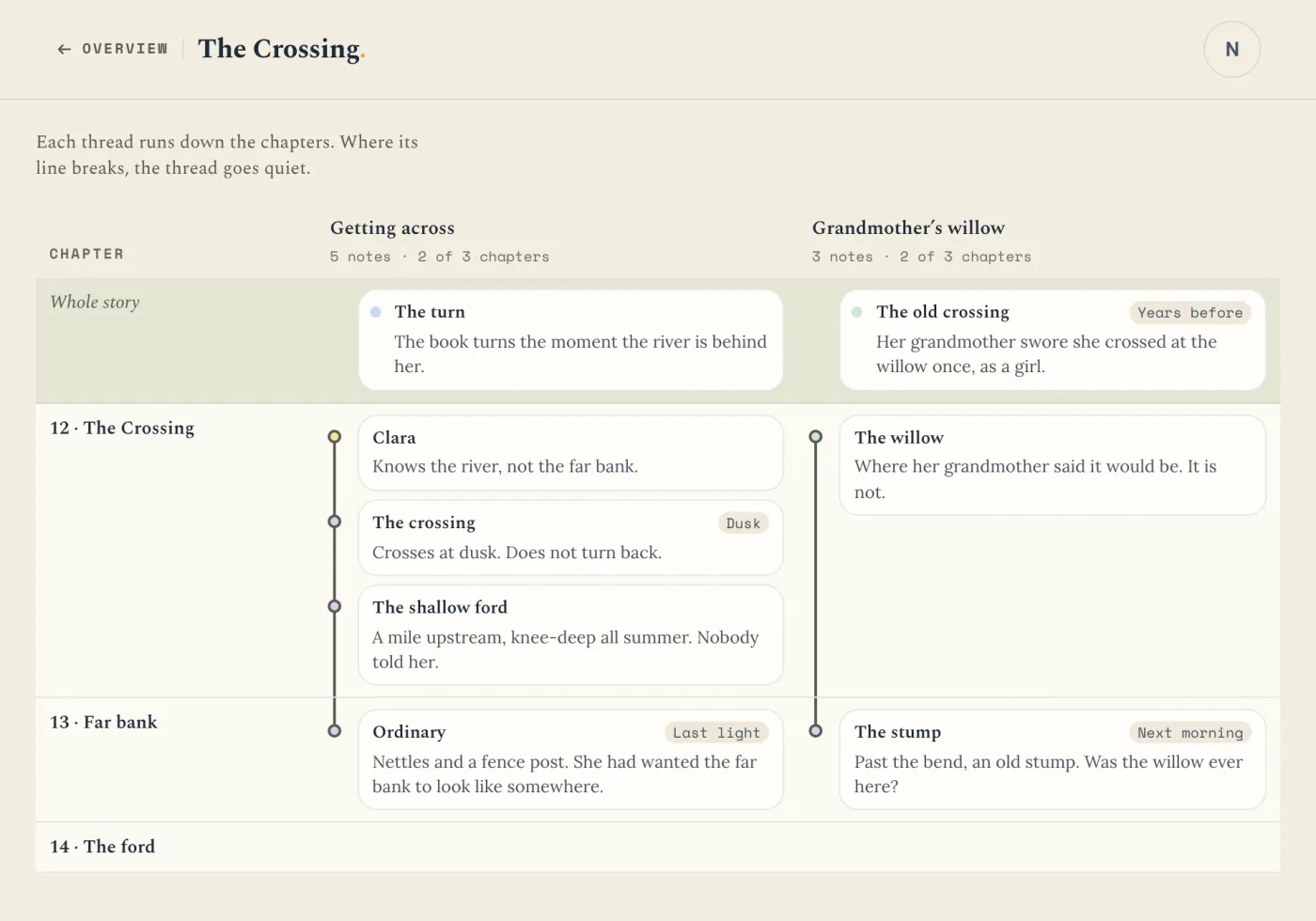
A Chapter Map holds the notes for that chapter. The Story Map holds what belongs to the whole book: themes, turning points, what happened before page one. Switching boards moves nothing and copies nothing.
Give each note a job
Colours mark characters, plot beats, themes, timeline and world-building. A note can say when it happens in the story as well as what happens. Connect two notes, label the connection, and zoom out when you need the whole shape.
Start from a structure
Lay out an editable beat sheet such as the three-act structure, the Hero’s Journey or Save the Cat on the Story Map, or a scene structure on a chapter’s board. The choices follow the template, so a memoir or an essay collection gets its own.
Bring existing prose onto the board
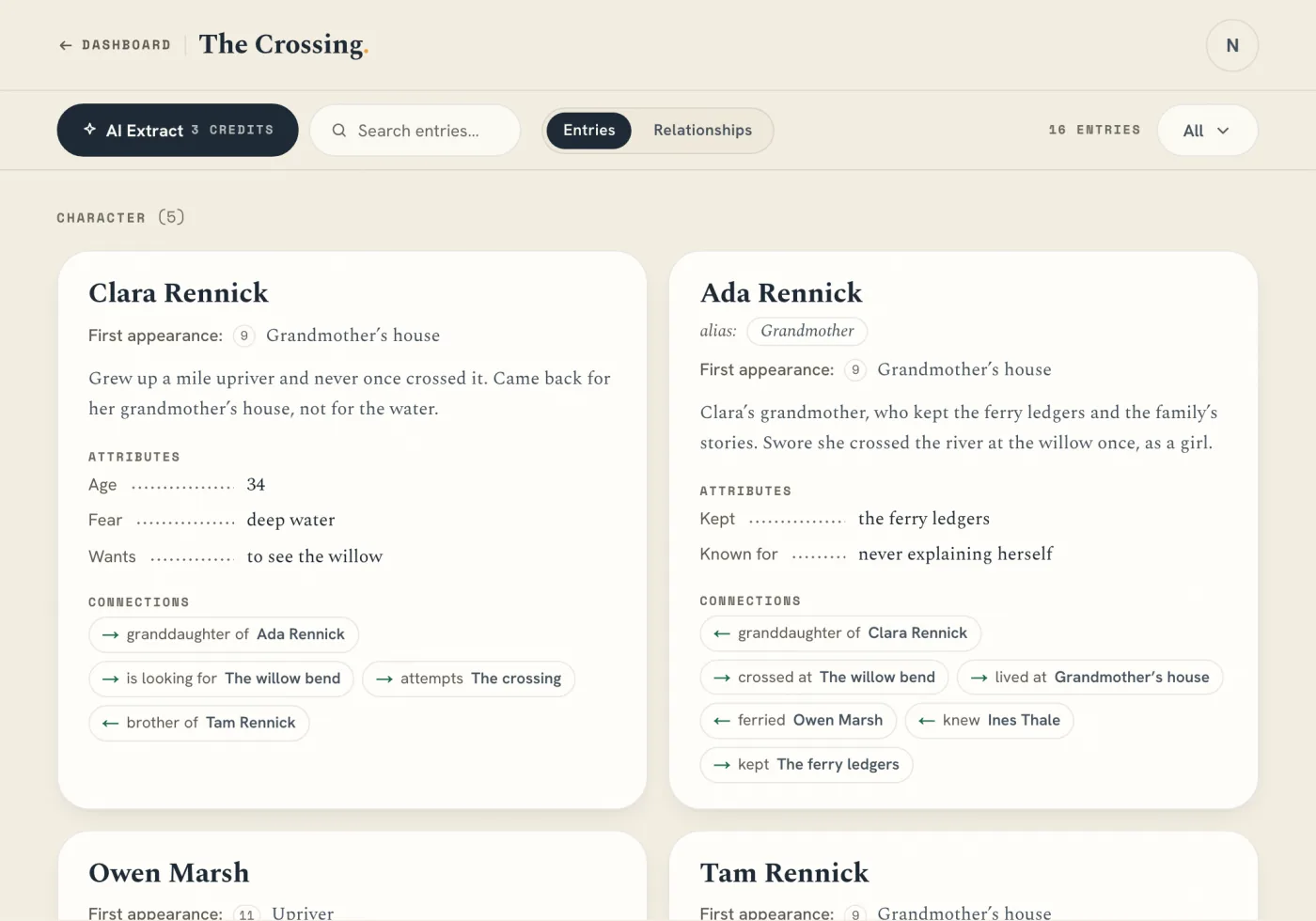
Already have chapters? AI Extract reads one chapter or the whole book and puts what it finds on the board as notes you can edit and rearrange. A Scrivener import does something similar: each scene’s synopsis and notes become a card on its chapter’s map.